.png)
AI Can Help Your Running. It Can’t Feel Your Pain.

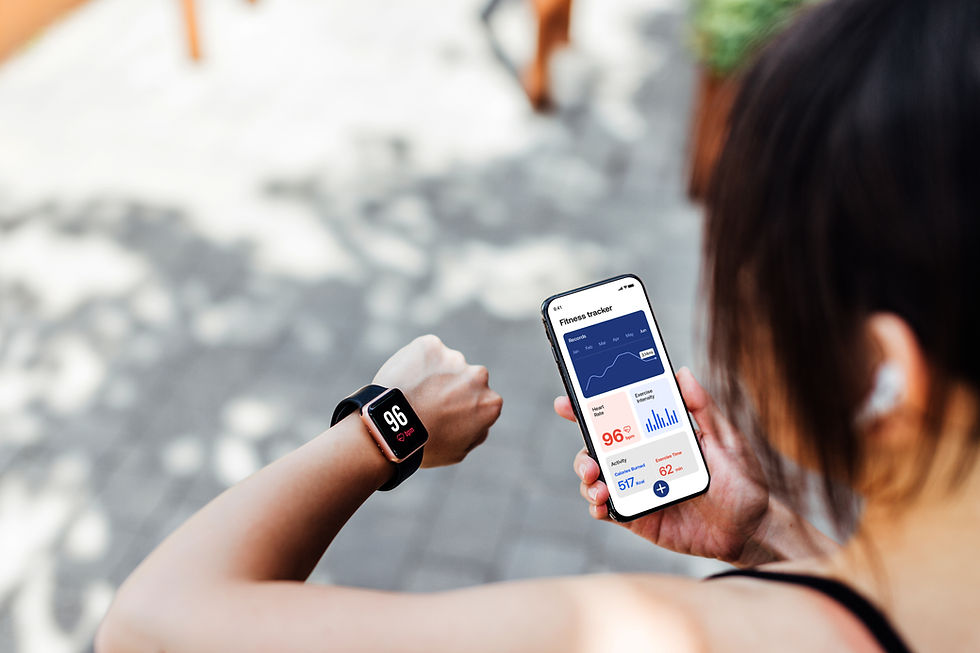
Runners have more information available to them than ever before.
We can track our pace, cadence, heart rate, sleep, heart rate variability, recovery scores, training load, stress levels, and even how symmetrical our running mechanics are. AI-powered coaching platforms can build training plans in seconds and adjust workouts based on our performance. This technology has made training more accessible and personalized than ever before for so many runners. I love that.
I also think it has become part of a new problem.
The more we rely on external feedback, the easier it becomes to lose touch with our internal feedback - how we feel.
As runners, one of the most important skills we develop over time is body awareness. We learn what easy pace feels like. We learn the difference between fatigue and injury.
We learn how stress impacts recovery and how our body responds to different training loads. We learn this through our experience and training, not from a watch or an app.
Ten, even fifteen years ago I was advocating for runners to stop wearing their watch once or twice a week so they could tune into their body - now it is even harder to get my patients to do this. But it is more important than ever. I dare you to run without any tech at least once a week. Do you think you can do it?
It's not because I don't like new tech. I think we are so lucky to have all this great technology. It can support us in so many ways. AND it can interrupt our ability to listen to our body and interpret the data it is giving to us.
I've worked with a lot of runners. So many of them know their HRV score every morning but can't tell me whether their calf pain is improving or getting worse. Others can recite every recovery metric on their watch but have no idea they are chronically under-fueling. Some are so focused on hitting certain paces that they completely missed the signs their body was struggling to keep up.
Data tells us what is happening, but it rarely tells us why.
A declining recovery score could be the result of hard training, poor sleep, life stress, inadequate nutrition, illness, travel, or the early stages of an injury. Our data is a clue, but not the whole picture.
This becomes especially important when pain enters the picture.
AI coaching platforms and wearable technology are becoming increasingly sophisticated, but they still struggle with context. They don't understand the difference between a sore Achilles after a hard workout and an Achilles tendon that has been gradually overloaded for six weeks. They can't identify whether knee pain is related to training volume, mobility restrictions, strength deficits, recovery habits, or life stress.
They collect information. They don't interpret the whole person. They have more data than ever but still don't know what to do when something hurts.
The future of running will absolutely involve AI, wearable technology, and increasingly personalized training platforms. I use many of these tools myself and often recommend them to runners. In fact the new RUNsource app has AI components to answer injury questions and running questions - but the information is sourced from our experts and research. It is focused on running injury and education - not metrics.
As we all figure out how AI and increased tech fits into our running let's think more about how we use the data to become more aware, not less.
The best runners I know pay attention to their body and their metrics. They use technology to identify trends, but they also listen to their bodies. They understand that numbers provide information, while awareness provides context.


Comments