.png)
Should Runners Use Wearables and Running Apps?

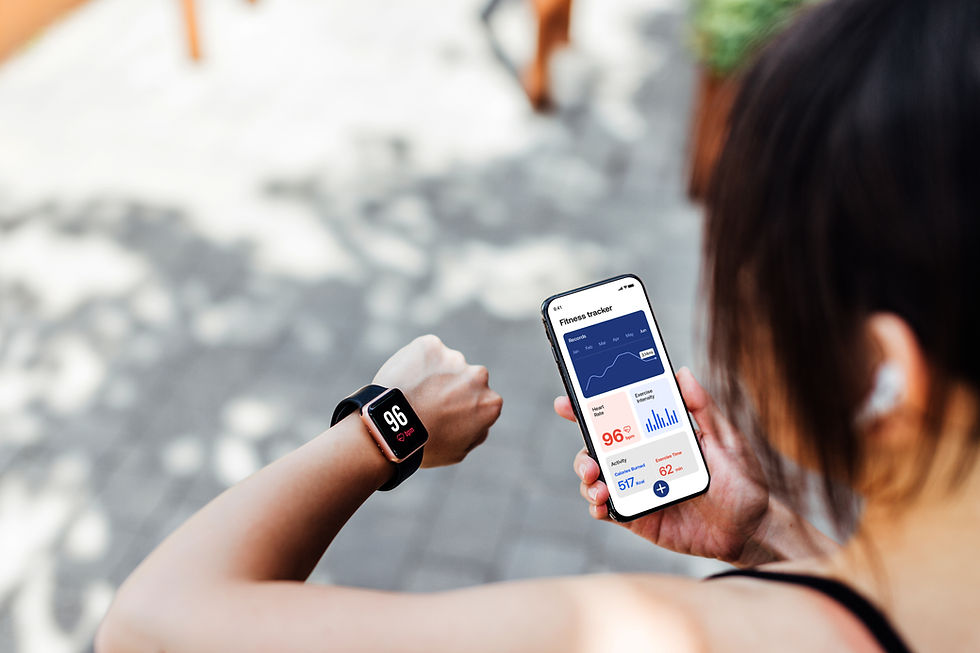
GPS watches, running apps, heart rate monitors, and training dashboards have become nearly universal in running. Many runners now track everything, pace, cadence, heart rate, sleep, recovery scores, and training load.
The question is no longer whether runners can collect data. The real question is: should runners rely on all of this data to guide their training?
From my perspective as a running PT, wearables and running apps can be extremely helpful tools. But they can also create unnecessary noise if runners rely on them too heavily. As runners we run the risk of obsessing over data so much that it can create more stress.
The Benefits of Wearables for Runners
One of the biggest advantages of wearables is the ability to monitor training load over time. Devices like GPS watches allow runners to track mileage, pace, HRV (one of my favorites) and training frequency with much greater accuracy than ever before.
This matters because inconsistency and sudden increases in running distance are strongly associated with injury risk. Tracking training volume through wearables can help runners avoid these spikes, improve consistency and progress their mileage more gradually.
Research also shows that many runners actively use apps and wearable technology as part of their training. Runners frequently use these tools to monitor distance, pace, and performance trends, often reporting that they improve motivation and accountability.
From a coaching or physical therapy standpoint, having objective data about training volume can also help identify patterns that contribute to injuries.
When Data Becomes Too Much Noise
While wearable technology provides valuable information, the amount of data available today can be overwhelming.
Modern devices track dozens of metrics, including cadence, vertical oscillation, ground contact time, recovery scores, and readiness metrics. The challenge is that many of these measurements lack clear evidence showing they meaningfully improve training decisions for most runners.
In clinical practice, it’s common to see runners become overly focused on minor fluctuations in these metrics rather than paying attention to how their body actually feels. How you feel is more important that what the number say.
I wrote about this issue previously in RUN Outside, where I discussed how the growing volume of running data can sometimes create more confusion than clarity. Runners now have access to more information than ever before but more data does not always translate to better training decisions (Mihevc Edwards, 2024).
Technology Should Support Training, Not Replace It
Running is ultimately a biological process. Your body adapts to stress over time, and the most important signals still come from basic training principles.
Research examining thousands of runners shows that training characteristics such as weekly mileage, running frequency, and consistency play a major role in injury patterns.
These are variables that wearable devices track very well.
But the most important feedback system runners have is still their own perception of effort, fatigue, and recovery.
Devices can measure pace and distance. They cannot fully measure how your body is adapting to training.
My Perspective?
Wearables and running apps can be powerful tools for runners. They make it easier to monitor training load, track progress, and stay consistent with training goals.
But more data does not always mean better training.
For most runners, the most useful metrics remain simple:
weekly mileage
pace trends over time
training consistency
recovery between runs
nutrition
sleep
Technology should support these fundamentals, but not distract from them.
Used wisely, wearables can help runners train smarter. But the most important feedback system will always be the one runners have had all along: their own body.
Have you checked out our RUNsource app yet? The new version was built to be a place you can go to ask any running related information or injury questions. There are injury programs, videos from running experts and AI agents built
References
Frandsen JSB et al. How much running is too much? Identifying high-risk running sessions in a 5200-person cohort study. British Journal of Sports Medicine.
Deelen I et al. Running App Use and Its Association With Running-Related Injuries and Physical Activity. JMIR mHealth and uHealth.
Abrahamson J et al. Using Self-Reported Training Characteristics to Better Understand Who Is More Likely to Sustain Running-Related Injuries. Garmin-RUNSAFE Running Health Study.
Mihevc Edwards K. Too Much Running Data. Outside Magazine, 2024.https://run.outsideonline.com/training/injuries-and-prevention/too-much-running-data/


Comments