.png)
Cold Runs, Stiff Hips: How to Keep Your Hips Happy This Winter

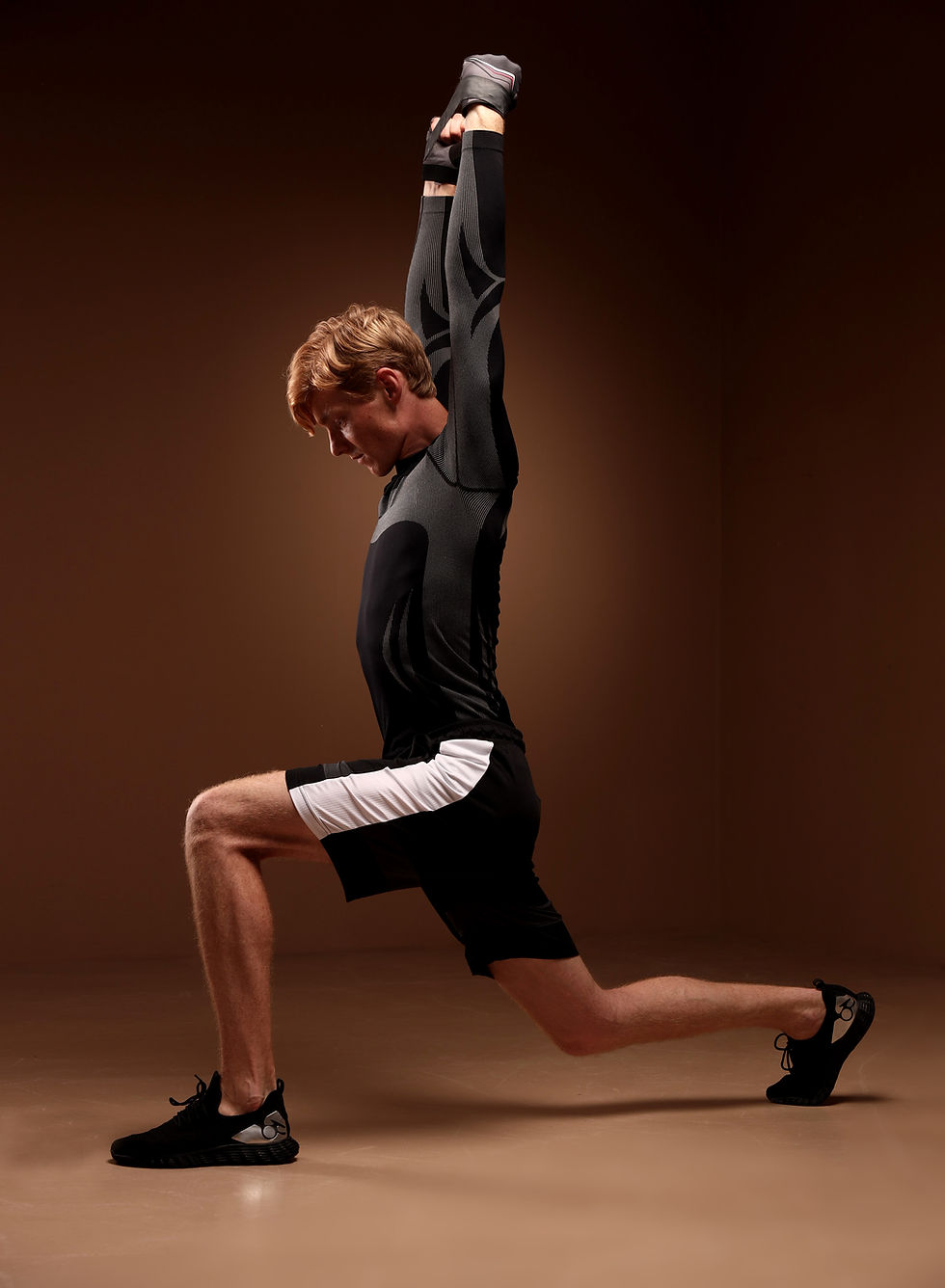
If your hips feel tighter than usual when the temperature drops, you're not imagining it.
That sluggish, stiff stride you feel at the start of a cold run is a real physiological response not a personal problem or something to just stretch your way through.
This is what happens:
Joint fluid becomes more viscous in colder temps, which means your joints don’t move as freely.
Blood flow to your muscles decreases, making them feel slower, tighter, and less responsive.
Your nervous system takes longer to “wake up,” especially in areas like the hips that play a huge role in stride mechanics.
But winter doesn’t have to mean stiff, cranky hips. You just need to prep differently and move with more intention.
Why the Hips Take the Hit
The hips do a lot of work in running: they stabilize, propel, absorb, and coordinate movement from your spine to your feet. In winter, when warm-ups are shorter (or skipped), and you’re sitting more (because holidays/travel/end-of-year work), the hips end up working harder under less-than-ideal conditions.
What you get is:
Limited hip extension
Tension in the hip flexors and deep rotators
Compensation from your low back or knees
That general “my stride feels weird” sensation
It’s not just tightness—it’s your system asking for more prep time and better mechanics.
What Actually Helps (Hint: It’s Not Just More Stretching)
Stretching isn’t the enemy, but it’s not the solution either especially if you’re doing static stretches before your run in 30-degree weather.
What works:
1. Dynamic warm-ups (yes, even inside)
Before heading out, get your hips moving with dynamic work like glute bridges, bodyweight squats, and walking lunges. If it’s too cold outside, do your warm-up in your living room first.→ You’ll find guided dynamic warm-ups built for cold-weather runs in the RUNsource App.
2. Mobility post-run—not just foam rolling
After your run, when your body is warm, that’s the time for deeper stretching, mobility drills, and foam rolling. It helps reset your hips and keeps stiffness from building up between runs.
3. Strength work through full range
Don’t just stretch, load. Single-leg glute work, lateral strength, and hip rotation exercises build mobility that actually lasts because you’re reinforcing it with control.
4. Gait matters more in the winter
Cold, stiff hips change your running mechanics. If you’re overstriding or compensating through your low back, you’re increasing stress on areas that weren’t built to take that load.
You Don’t Need to Overhaul, You Just Need a Smarter Routine
Winter training isn’t about doing more. It’s about doing what works and doing it consistently. Your hips don’t need rescuing. They need better prep and support so they can do what they’re built to do.
A few minutes of warm-up, a couple strength sessions a week, yoga or the right mobility work can keep your hips moving well all season long.
RUNsource: Built for Cold-Weather Training
Inside the RUNsource App, you’ll find:
Cold-weather dynamic warm-up flows
Hip-focused mobility routines
Strength circuits designed for runners
Yoga for runners
Education so you know why your body feels the way it does and how to stay ahead of it
Winter doesn’t have to be the season your hips revolt. Build a plan that works with your body, not against it.



Comments